
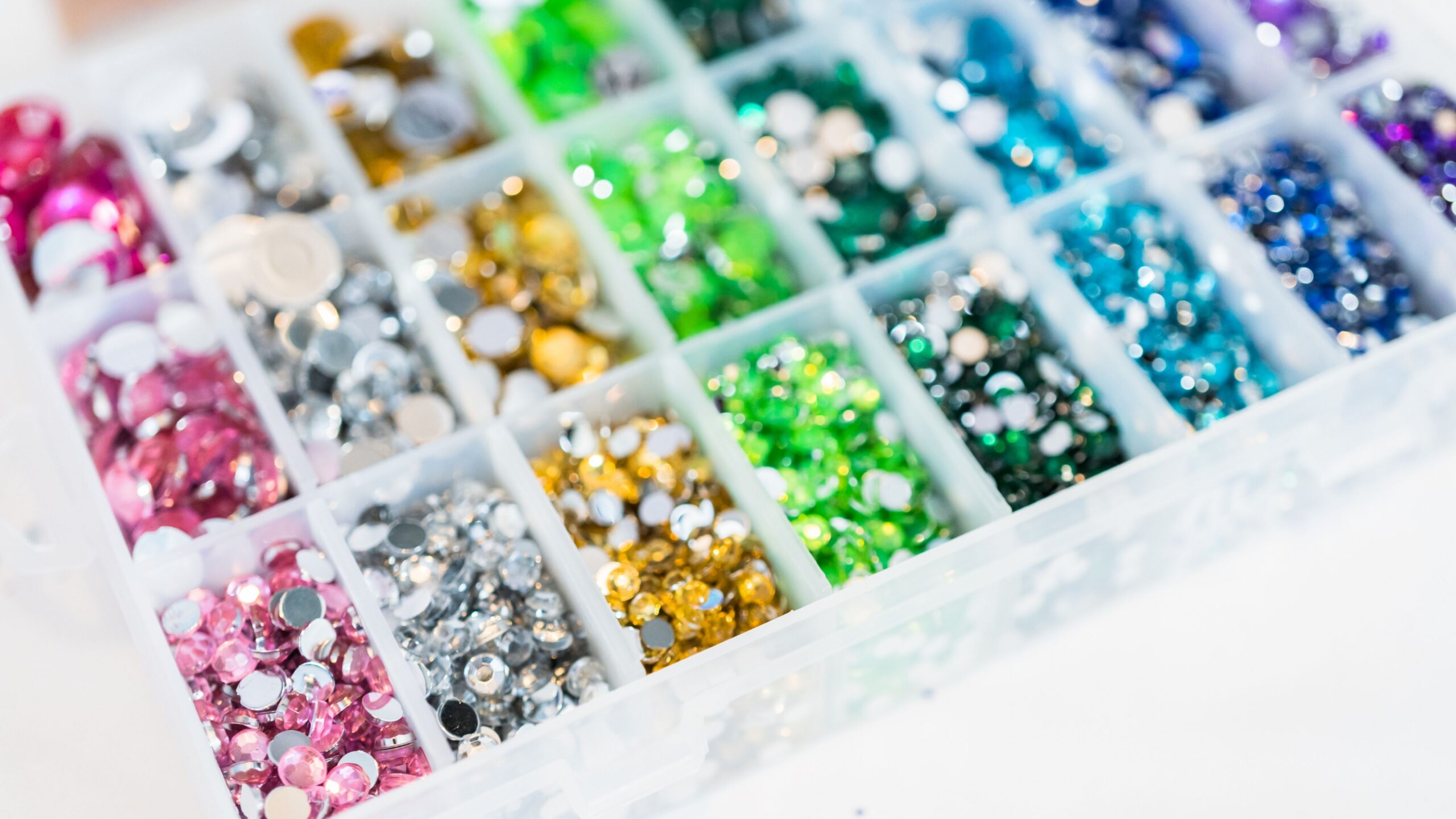
The bedazzling craze that shined through the ‘80s, an era when The Golden Girls and their real-life counterparts embraced unapologetic glam-ma style, is having a surprising second act. Fueled by a love of nostalgic “grandma crafts” and a growing openness around mental health, Gen Z and millennials are applying the same dazzling creative spirit to something more personal — blinged-out bottles of prescription mental health medications — blending self-care and stigma reduction into one sparkling statement.
Crafting Calm: How Nostalgic Hobbies Became Modern Self-Care
The wellness benefits of art therapy have long been recognized, and the resurgence of grandmacore crafts (think knitting, crocheting, embroidery, sewing, quilting, and yes, bedazzling) among younger generations suggests that many are discovering those same therapeutic qualities through wistful, cozy hobbies that focus on slow, repetitive movements. These hands-on activities mirror many of the principles of art therapy by encouraging mindfulness, creative expression and focused attention on the present moment.
“Sometimes, taking care of our mental health can be as simple as slowing down and making something with our hands,” says Grace Palenick, clinical team supervisor and art therapist. “Creativity gives us an opportunity to step away from the noise, focus on the present moment and reconnect with ourselves.”
The rhythmic, tactile nature of crafting can help quiet racing thoughts, reduce stress and provide a sense of accomplishment, making it a valuable tool for supporting emotional well-being. In a world of constant notifications and screen time, slow, intentional hobbies offer a simple way to reconnect with imagination and care for one’s mental health.
From Mundane to Meaningful: The Psychology Behind the Romanticizing Life Trend
Beyond its craft-as-therapy appeal, bedazzled prescription psychotropic drug bottles align with the social media-fueled cultural movement toward “romanticizing” everyday life, a narrative that encourages people to infuse intentional joy into even the most mundane moments. What may look like a largely superficial trend motivated primarily by aesthetics is actually rooted in a deeper psychological concept that can provide real therapeutic value: it’s called positive cognitive reframing and it’s a technique used to help people rewire how they perceive their experiences.
“When we approach ordinary routines with more intention and creativity, we’re practicing a form of mindfulness,” says Chris Eggleston, MD, medical director of Northern California, Central Valley, Inland Empire regions & LynCentro division. “Even brief moments of pleasure or self-expression can interrupt autopilot and help us feel more grounded in the present.”
Related trends like dopamine dressing/decor reflect this mindset, the goal being to surround yourself with things that make every day feel a little brighter. It’s perhaps no surprise then that the same impulse has found its way to the humble orange prescription bottle.
Bedazzled Prescription Bottles: Reclaiming the Mental Health Conversation
For some, what was once a sterile plastic container has become a miniature canvas for creative individualism — a vessel for reclaiming the narrative surrounding mental health medications.
Shame, secrecy and outdated stereotypes have long shaped how people talk or don’t talk about depression, anxiety, bipolar disorder and other mental health conditions. Personalizing a pill bottle can be a small but meaningful way to challenge that stigma, transforming something often hidden into an empowering expression of self.
It's about making something clinical feel human. Bedazzling a cute pattern or cheeky phrase (e.g. the Taylor Swift-inspired All Too Well-butrin; or Live. Love. Lexapro.) commands confident ownership.
In many ways, the rhinestones are almost beside the point. The real transformation isn’t happening to the bottle, but rather to the conversation surrounding it. For decades, psychiatric medication was often treated as something to whisper about. Today, a generation raised on authenticity and online community is more likely to ask why it should be hidden at all.
Maybe that’s why this trend feels bigger than a craft project. It’s about agency. It’s about taking an object often associated with vulnerability and making it feel a little more like your own. It’s about finding moments of joy in routines that aren’t always easy. And, perhaps most importantly, it’s a reminder that reducing stigma doesn’t always happen through sweeping campaigns or viral videos. Sometimes it starts with small, personal acts of self-expression and the willingness to share our lived experiences with others. Because when individual moments of honesty become shared stories, they create the foundation for collective understanding, acceptance and change. Even the biggest shifts in how we talk about mental health can start with something small: a little creativity, a little courage and a little sparkle, one rhinestone at a time.
BEDAZZLED PRESCRIPTION BOTTLES SAFETY NOTE:
If you choose to decorate a prescription medication bottle, always keep the original pharmacy label securely attached, intact and readable. Do not cover, obscure or alter important information such as the medication name, dosage, expiration date, pharmacy instructions or warning labels. Avoid harsh adhesives, solvents, paints or glues that could damage the bottle’s amber/UV-protective coating, and do not decorate the removeable cap in a way that could interfere with opening or securely closing the bottle. The bottle and label are designed to protect the medication and provide important information — so get creative, but keep safety and readability first.
Art therapy groups are currently available at various Pacific Clinics locations. Contact 877-PC-CARES for more information.