Pacific Clinics employees, clients and families we serve have been impacted by the Southern California fires. For ways to give, click here: Donate to Pacific Clinics Assistance Fund

Pacific Clinics delivers high-quality behavioral health and social services to advance health equity and well-being for children, adults and families. Learn more about our life-affirming services offered on-site, at home, virtual and in the community.
Educational Programs provide students with the skills they need to live successful lives. Our robust programs include early childhood development, classroom consultations in partnership with school districts, adult continuing education programs and parent workshops.
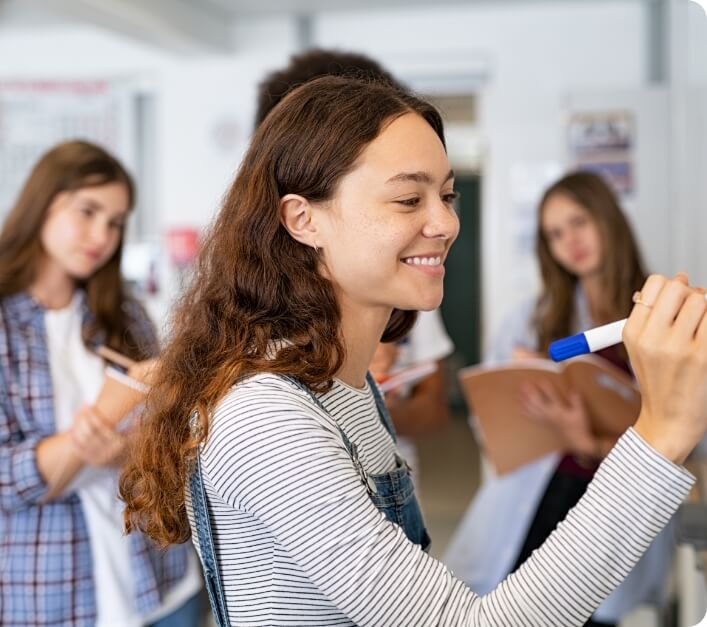
Support Services offer various programs to address social determinants of health, including housing and employment coaching and placement, among other critically needed services.

The growing awareness of neurodiversity has opened new avenues for treatment and care. But while greater recognition and rising diagnoses are driving demand for one-to-one support services for young people, qualified employees remain in short supply. To help those in need from ever-growing waitlists for support services, Pacific Clinics has launched – Social Groups for Social Delays. This Neurodevelopmental Services (NDS) program aims to address neurodivergence in a group setting, where peers learn and develop key communication and coping skills through social interactions.
In the formative years when brains are growing and maturing, meaningful social growth doesn’t happen in isolation. For toddlers, children, teens, and young adults, socialization happens mainly through peer interactions. School, team sports, friend groups, and the like provide the examples young people model in their behaviors. If you’re looking for an opportunity for a neurodivergent child, teen, or young adult to build real social connections while developing critical interpersonal skills, Specialty Social Skills may be an excellent fit.
Participants meet in a small, controlled group with peers working toward similar goals, guided by a qualified professional who understands each group member’s specific needs.
The group setting itself is a key component of the neurodevelopmental process. Rather than teaching skills in isolation, the group setting offers real opportunities to practice social awareness, self-expression, productive communication, and to solve problems as they arise naturally, with guidance from a trained facilitator.
Group services give participants opportunities to build skills while connecting and practicing with peers. Benefits include:
Group support offers the opportunity to build critical skills where they matter most: among peers navigating similar challenges.
The Specialty Social Skills approach to group support draws on two strong evidence-based models:
Originally developed as an individual therapy approach for young children on the autism spectrum, the Early Start Denver Model has been adapted for small group settings and has seen considerable documented success. This group-based format blends developmental, relationship-focused strategies with peer learning that arises from the group’s natural opportunities to practice communication and social engagement.
Developed at UCLA, PEERS (an acronym for Program for the Education and Enrichment of Relational Skills) is an extensively researched curriculum for teens and young adults focused on building and maintaining healthy friendships, managing peer conflicts, and developing everyday skills that yield lasting relationships. The PEERS program has been the subject of many research studies, and former participants have shown marked, lasting improvement in social engagement.
Both models share a common thread that forms the basis of the Specialty Social Skills program: The skills and strategies are not merely presented as lessons but practiced in a group setting organized around genuine peer interaction.
Specialty Social Skills serves individuals from 18 months through age 21. Group participation requires few prerequisite skills, opening the door to a wide range of individuals.
Potential applicants who display extremely aggressive behavior or elopement (those known to leave care facilities or treatment sessions without permission) may need a minder to oversee them in group sessions. But this doesn’t necessarily rule anyone out. Our team works with families to understand how a group functions and to find the right group for their child.
Each participant in Specialty Social Skills works toward individual goals identified by our clinical team. Groups are small, attentively managed, and give all members a genuine opportunity to be seen, heard, and supported by both peers and staff.
Please note: This is a structured therapeutic intervention, not a drop-in social club or recreational activity. Group meetings are designed to address each participant’s goals, with employees guiding interactions, offering in-the-moment support, and adjusting group dynamics as participants develop and grow.
Outcomes ultimately depend on individual goals. That said, group participants may build a range of skills, including:
At Pacific Clinics, we value and celebrate differences. And this guiding principle shapes our approach not only to the Specialty Social Skills program, but to every service we offer. With respect to the neurodivergent people we serve, we’re not teaching them to “mask” autistic traits or appear “more neurotypical.” Our goal is to empower toddlers, children, teens, and young adults to develop genuine communication, self-expression, and coping skills as they build meaningful social connections. All in a safe environment that respects each person’s unique identity.
The Specialty Social Skills program helps neurodivergent people build the tools to navigate social situations, form genuine friendships, and gain a true sense of belonging.
If you are a parent, clinical practitioner, or other support person or caregiver and feel your child, teen, or young adult, or one in your care, could benefit from the Specialty Social Skills program, our team is available to discuss your options.
Families that apply begin by completing a caregiver screening. This is a short conversation that helps us understand the applicant’s background and ultimately place them in a group that best serves their needs.
For more information or to apply, contact Pacific Clinics’ Neurodevelopmental Center at 800-906-0862 or email us at NDS@pacificclinics.org.
Call 800-906-0862 Email Our Team