



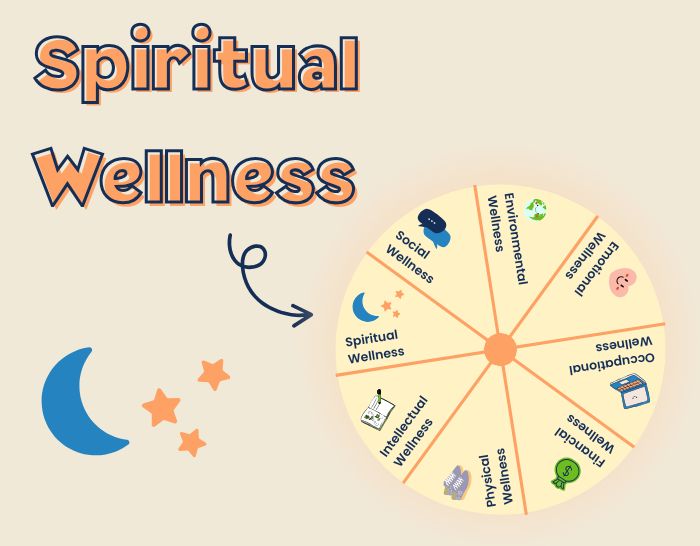
The Wellness Wheel is a tool used by psychologists to show how various areas of life contribute to overall well-being. It includes eight key dimensions: emotional, physical, social, spiritual, occupational, environmental, intellectual and financial health. Each week, we will explore a different element and its importance.
Spiritual wellness is one of those areas that people either pay a lot of attention to or place on the back burner. Regardless of where it sits on your list, spiritual wellness profoundly impacts your mental health.
While people often associate spirituality with religion, spiritual wellness reflects a broad and personal journey shaped by individual beliefs and experiences. It’s a personal exploration of meaning and purpose, often involving a sense of connection to something greater than yourself.
Values
Our values often stem from childhood and show up in our decisions as adults. Whether shaped by family, culture, or personal experiences, values guide our actions and influence how we feel about ourselves. When our actions align with our beliefs, we experience clarity, peace and fulfillment. When they don’t, it can lead to confusion, guilt, or a sense that something is missing.
Some common examples of value systems include:
- “Honesty is the best policy.”
- “United we stand, divided we fall.”
- “Don’t judge a book by its cover.”
People nurture values in different ways. Some rely on religious teachings, while others follow moral or ethical beliefs instilled during childhood. Whatever your path, feeling uneasy or disconnected from your actions is a gentle sign that it’s time to realign with your core values.
Practices to Strengthen Spiritual Wellness
Start by reflecting on your purpose and meaning. Think of purpose as what you choose to do, and meaning as why you do it. For example, if your purpose is to care for others, your meaning might come from seeing how your compassion improves someone else’s life. You can also ask yourself reflective questions, such as:
- Does this activity feel aligned with my values?
- Will saying ‘yes’ move me toward my long-term goals?
- Does this choice leave me feeling content, affirmed and centered?
You will have more clarity after you develop a more defined understanding of your meaning and purpose. Therefore, taking the time to ask yourself these questions can help ground and align you with the right choices. Afterwards, you can:
- Practice Gratitude – A daily habit of recognizing what’s going well or what you’re thankful for. This will help shift focus from what’s missing to what is present.
- Dedicate Time to Yourself – Spending moments alone can help you reconnect with your thoughts and emotions, reflect on your priorities, and accomplish tasks that are harder to focus on when others are present.
- Learn to Say No – It’s okay to step away from commitments, relationships or environments that don’t resonate with you, as it will help you stay aligned with your values.
- Identify and Write Down Your Values – Listing what truly matters to you gives you a reference point. When something feels off, ask yourself if it aligns with your values.
- Seek Guidance If Needed – A support group, a spiritual practice or a trusted individual can help you gain clarity and help you feel supported in your journey.
Simple Ways to Reconnect Spiritually
If you are having a hard time reconnecting with your spirituality, you can try:
- Meditation – Spending quiet moments in reflection, either through breathwork, prayer, or simply sitting in stillness, can help you listen to your inner voice and restore balance.
- Connecting with Nature – Studies show that time outdoors can foster a sense of connection beyond yourself. Nature also helps you slow down, reflect and find grounding in the present moment.
- Talk to Others – Conversations with trusted friends, mentors or support groups can offer perspective and emotional support.
- Journal Your Thoughts – Writing can help you process emotions and recognize patterns in your thinking. You don’t need to write perfectly; you can use pseudonyms or creative storytelling to express yourself freely.
In essence, spiritual wellness is about alignment.
When asked what they do for their spiritual wellness, Giovana Aguilar, associate clinical coordinator, said, “I wake up every morning and stretch. I play nature sounds on my phone and do yoga for ten minutes. Next, I name all the things I am thankful for, then I and check in with myself to start my day.”
Spiritual wellness is about living and aligning in a way that honors your values and brings peace to your mind, which can add meaning to your days. Whether through reflection, connection, or creativity, taking care of your spiritual health can bring the clarity you need to support your spiritual wellness.