
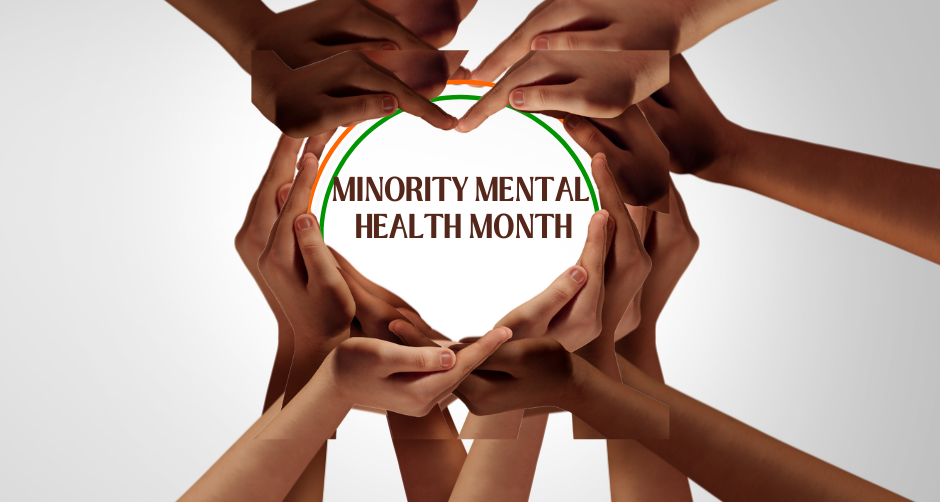
BIPOC Mental Health Month invites us to think about what makes mental health care feel welcoming, effective and worthy of people’s trust.
You’ve finally decided to make the appointment.
Maybe your spouse has been encouraging you for months. Maybe your doctor gently brought it up again at your last physical. Or maybe you’re just tired of trying to carry something that has become too heavy on your own.
Whatever brought you here, you’ve made it through the paperwork, settled into the waiting room and finally heard your name called.
You’re ready to talk about what’s been keeping you up at night. But another question sneaks in first:
Will I have to explain my world before I can explain what’s hurting?
For some people, that means explaining why three generations of families live under one roof. For others, it’s why a parent expects to join the appointment, whether they should bring an interpreter or why they keep checking the time because someone else is watching the kids.
None of those things may be the reason someone walks through the door. But they’re part of the person who did.
Every Story Starts Somewhere
Good mental health care starts with listening. Listening for symptoms, of course, but just as importantly, listening for context.
Every person’s story is shaped by different experiences, relationships, traditions and communities. Understanding these things isn’t a detour from treatment, though. It’s part of the work.
That’s why mental health professionals often talk about “meeting people where they are.” The phrase has become so common that it’s easy to forget what it really means. One way to understand it is this: every person brings a unique story into the room. From there, you decide together what care should look like, rather than assuming a single approach will work for everyone.
We all come from somewhere, and meeting someone where they’re at is the difference between that first appointment being their last and coming back for a second appointment,” said Program Director Rachel Riphagen. “Two key pieces that make a difference are being culturally sensitive and trauma-informed. When someone gets care from a mental health professional who truly sees them, it’s a game changer.”
Sometimes that means connecting someone with a clinician who speaks their preferred language or understands important parts of their cultural background.
Other times, it means inviting grandparents, faith leaders or other trusted loved ones to be included because that’s how decisions are made in that household. Or, helping parents understand that seeking help isn’t a sign they’ve failed.
Often, it’s asking, “Tell me more.”
What Helps Someone Come Back?
This conversation is at the heart of Bebe Moore Campbell National Minority Mental Health Awareness Month (also known as Minority Mental Health Month or BIPOC Mental Health Month), observed each July.
Named for the author, advocate and co-founder of the National Alliance on Mental Illness Urban Los Angeles, the observance shines a light on the importance of making mental health care more welcoming and accessible for communities that have too often faced barriers to care.
“When we use words like ‘client voice and choice’ in our values, Bebe Moore Campbell gave those words meaning and life for communities whose mental health was not even considered,” said Clinical Director Gabrielle Waring. “Honoring her impact this month is vital to continue shining the light on our communities that face stigma, oppression and unique struggles that affect mental health.”
Much of the attention during Minority Mental Health Month focuses on helping more people access care, for good reason. Practical obstacles, stigma and past experiences can all make asking for help feel more difficult.
But once someone walks through the door, other questions become just as important: what makes mental health care feel positive, effective and worthy of the trust people place in it? What makes someone come back for their next appointment?
Sometimes, it’s simply the feeling that they can get to the reason they came.
They can spend less time explaining their family, their language or their community, and more time talking about the depression that won’t lift or the parenting challenges that finally feel too big to carry alone. Less time providing context, more time beginning the work they came to do.
“When someone looks like you or has similar experiences to you, it can spark trust, rapport and a deeper sense of being understood,” said Senior Vice President of Workforce Engagement and Impact Michelle Linares.
Care Isn’t One-Size-Fits-All
At Pacific Clinics, that philosophy shows up in different ways across the organization.
For some families, it means finding support through Pacific Clinics’ Asian Pacific Family Center, where programs are rooted in the languages, cultures and lived experiences of the communities they serve.
For others, it means gathering at events like Noche de Familia in Monrovia, where families can celebrate culture, connect with neighbors and learn about behavioral health resources in a welcoming environment.
Pacific Clinics’ Hye Wrap site – originally developed for the Armenian community in Glendale at a time when many had newly immigrated to the United States and were adjusting to a new language, culture and home – began as a school-based program to serve children, youth and families through therapy and counseling and linkage to support services, and has now expanded to provide Wraparound services.
The programs may look very different, but they share the same starting point: that effective care is built around the unique individual sitting in front of you.
Where Would You Like to Begin?
Seeking help is an act of trust.
One of the most important things a provider can do is honor that trust by making room for the whole person: not just the diagnosis, but the family, the history, the language, the values and the hopes they bring with them.
At Pacific Clinics, our goal is to create a place where people can spend less time explaining who they are and more time working through what brought them through the door. The person seeking care is already the expert on their own life. Our job is to meet them there.
Additional Resources and Community Supports
Finding the right support can look different for everyone. Pacific Clinics is here to help, and the organizations below offer additional resources, information and connections to care for a range of communities and needs.
- American Foundation for Suicide Prevention – Health Resources for Marginalized Communities
Dedicated to saving lives and bringing hope to those affected by suicide. - Asian Mental Health Collective
Raises awareness about mental health care, promotes emotional well-being and challenges stigma in Asian communities globally. - Black Emotional and Mental Health Collective (BEAM)
Removes barriers to emotional health care and healing for Black people. - Black Mental Health Alliance
Offers culturally-relevant educational forums, trainings and referrals to support Black communities. - Loveland Foundation
Supports communities of color, particularly Black women and girls, through unique mental health services. - MANA – A National Latina Organization
Represents the interests of Latina women, youth and families nationwide through grassroots advocacy. - Mental Health America – BIPOC Mental Health
Leading nonprofit promoting mental health and supporting those affected by mental health challenges, with BIPOC-specific resources and toolkits. - National Alliance for Hispanic Health
Improves care quality and access for Hispanics; offers a free bilingual health helpline at 1-866-783-2645. - National Queer and Trans People of Color Network
Offers a therapy directory for LGBTQ BIPOC and promotes healing justice for a diverse spectrum of identities. - StrongHearts Native Helpline
A 24/7 safe, confidential and anonymous domestic and sexual violence helpline for Native Americans and Alaska Natives, offering support and advocacy. - We are SAATH
Seeks to increase access to mental health resources for the South Asian community through activism, education and storytelling. - WeRNative
Health resource by and for Native youth, promoting holistic wellness through culturally relevant content.